How each engine answered
'%20transform='translate(0%201)'%3e%3c/path%3e%3cpath%20d='M6.726%2020.16A2.528%202.528%200%20009.152%2022h1.566c1.37%200%202.49-1.1%202.525-2.48l.17-6.69-.357%201.228a2.528%202.528%200%2001-2.423%201.83h-4.32l-1.54-.842-1.667.843h.497c1.124%200%202.113.75%202.426%201.84l.697%202.432z'%20fill='url(%23lobe-icons-copilot-1-_R_0_)'%20transform='translate(0%201)'%3e%3c/path%3e%3cpath%20d='M15%200H6.252c-2.5%200-4%203.331-5%206.662-1.184%203.947-2.734%209.225%201.75%209.225H6.78c1.13%200%202.12-.753%202.43-1.847.657-2.317%201.809-6.359%202.713-9.436.46-1.563.842-2.906%201.43-3.742A1.97%201.97%200%200115%200'%20fill='url(%23lobe-icons-copilot-2-_R_0_)'%20transform='translate(0%201)'%3e%3c/path%3e%3cpath%20d='M15%200H6.252c-2.5%200-4%203.331-5%206.662-1.184%203.947-2.734%209.225%201.75%209.225H6.78c1.13%200%202.12-.753%202.43-1.847.657-2.317%201.809-6.359%202.713-9.436.46-1.563.842-2.906%201.43-3.742A1.97%201.97%200%200115%200'%20fill='url(%23lobe-icons-copilot-3-_R_0_)'%20transform='translate(0%201)'%3e%3c/path%3e%3cpath%20d='M9%2022h8.749c2.5%200%204-3.332%205-6.663%201.184-3.948%202.734-9.227-1.75-9.227H17.22c-1.129%200-2.12.754-2.43%201.848a1149.2%201149.2%200%2001-2.713%209.437c-.46%201.564-.842%202.907-1.43%203.743A1.97%201.97%200%20019%2022'%20fill='url(%23lobe-icons-copilot-4-_R_0_)'%20transform='translate(0%201)'%3e%3c/path%3e%3cpath%20d='M9%2022h8.749c2.5%200%204-3.332%205-6.663%201.184-3.948%202.734-9.227-1.75-9.227H17.22c-1.129%200-2.12.754-2.43%201.848a1149.2%201149.2%200%2001-2.713%209.437c-.46%201.564-.842%202.907-1.43%203.743A1.97%201.97%200%20019%2022'%20fill='url(%23lobe-icons-copilot-5-_R_0_)'%20transform='translate(0%201)'%3e%3c/path%3e%3cdefs%3e%3cradialGradient%20cx='85.44%25'%20cy='100.653%25'%20fx='85.44%25'%20fy='100.653%25'%20gradientTransform='scale(-.8553%20-1)%20rotate(50.927%202.041%20-1.946)'%20id='lobe-icons-copilot-0-_R_0_'%20r='105.116%25'%3e%3cstop%20offset='9.6%25'%20stop-color='%2300AEFF'%3e%3c/stop%3e%3cstop%20offset='77.3%25'%20stop-color='%232253CE'%3e%3c/stop%3e%3cstop%20offset='100%25'%20stop-color='%230736C4'%3e%3c/stop%3e%3c/radialGradient%3e%3cradialGradient%20cx='18.143%25'%20cy='32.928%25'%20fx='18.143%25'%20fy='32.928%25'%20gradientTransform='scale(.8897%201)%20rotate(52.069%20.193%20.352)'%20id='lobe-icons-copilot-1-_R_0_'%20r='95.612%25'%3e%3cstop%20offset='0%25'%20stop-color='%23FFB657'%3e%3c/stop%3e%3cstop%20offset='63.4%25'%20stop-color='%23FF5F3D'%3e%3c/stop%3e%3cstop%20offset='92.3%25'%20stop-color='%23C02B3C'%3e%3c/stop%3e%3c/radialGradient%3e%3cradialGradient%20cx='82.987%25'%20cy='-9.792%25'%20fx='82.987%25'%20fy='-9.792%25'%20gradientTransform='scale(-1%20-.9441)%20rotate(-70.872%20.142%201.17)'%20id='lobe-icons-copilot-4-_R_0_'%20r='140.622%25'%3e%3cstop%20offset='6.6%25'%20stop-color='%238C48FF'%3e%3c/stop%3e%3cstop%20offset='50%25'%20stop-color='%23F2598A'%3e%3c/stop%3e%3cstop%20offset='89.6%25'%20stop-color='%23FFB152'%3e%3c/stop%3e%3c/radialGradient%3e%3clinearGradient%20id='lobe-icons-copilot-2-_R_0_'%20x1='39.465%25'%20x2='46.884%25'%20y1='12.117%25'%20y2='103.774%25'%3e%3cstop%20offset='15.6%25'%20stop-color='%230D91E1'%3e%3c/stop%3e%3cstop%20offset='48.7%25'%20stop-color='%2352B471'%3e%3c/stop%3e%3cstop%20offset='65.2%25'%20stop-color='%2398BD42'%3e%3c/stop%3e%3cstop%20offset='93.7%25'%20stop-color='%23FFC800'%3e%3c/stop%3e%3c/linearGradient%3e%3clinearGradient%20id='lobe-icons-copilot-3-_R_0_'%20x1='45.949%25'%20x2='50%25'%20y1='0%25'%20y2='100%25'%3e%3cstop%20offset='0%25'%20stop-color='%233DCBFF'%3e%3c/stop%3e%3cstop%20offset='24.7%25'%20stop-color='%230588F7'%20stop-opacity='0'%3e%3c/stop%3e%3c/linearGradient%3e%3clinearGradient%20id='lobe-icons-copilot-5-_R_0_'%20x1='83.507%25'%20x2='83.453%25'%20y1='-6.106%25'%20y2='21.131%25'%3e%3cstop%20offset='5.8%25'%20stop-color='%23F8ADFA'%3e%3c/stop%3e%3cstop%20offset='70.8%25'%20stop-color='%23A86EDD'%20stop-opacity='0'%3e%3c/stop%3e%3c/linearGradient%3e%3c/defs%3e%3c/svg%3e) Copilot
Copilot'%3e%3c/path%3e%3cpath%20d='M20.616%2010.835a14.147%2014.147%200%2001-4.45-3.001%2014.111%2014.111%200%2001-3.678-6.452.503.503%200%2000-.975%200%2014.134%2014.134%200%2001-3.679%206.452%2014.155%2014.155%200%2001-4.45%203.001c-.65.28-1.318.505-2.002.678a.502.502%200%20000%20.975c.684.172%201.35.397%202.002.677a14.147%2014.147%200%20014.45%203.001%2014.112%2014.112%200%20013.679%206.453.502.502%200%2000.975%200c.172-.685.397-1.351.677-2.003a14.145%2014.145%200%20013.001-4.45%2014.113%2014.113%200%20016.453-3.678.503.503%200%20000-.975%2013.245%2013.245%200%2001-2.003-.678z'%20fill='url(%23lobe-icons-gemini-1-_R_0_)'%3e%3c/path%3e%3cpath%20d='M20.616%2010.835a14.147%2014.147%200%2001-4.45-3.001%2014.111%2014.111%200%2001-3.678-6.452.503.503%200%2000-.975%200%2014.134%2014.134%200%2001-3.679%206.452%2014.155%2014.155%200%2001-4.45%203.001c-.65.28-1.318.505-2.002.678a.502.502%200%20000%20.975c.684.172%201.35.397%202.002.677a14.147%2014.147%200%20014.45%203.001%2014.112%2014.112%200%20013.679%206.453.502.502%200%2000.975%200c.172-.685.397-1.351.677-2.003a14.145%2014.145%200%20013.001-4.45%2014.113%2014.113%200%20016.453-3.678.503.503%200%20000-.975%2013.245%2013.245%200%2001-2.003-.678z'%20fill='url(%23lobe-icons-gemini-2-_R_0_)'%3e%3c/path%3e%3cdefs%3e%3clinearGradient%20gradientUnits='userSpaceOnUse'%20id='lobe-icons-gemini-0-_R_0_'%20x1='7'%20x2='11'%20y1='15.5'%20y2='12'%3e%3cstop%20stop-color='%2308B962'%3e%3c/stop%3e%3cstop%20offset='1'%20stop-color='%2308B962'%20stop-opacity='0'%3e%3c/stop%3e%3c/linearGradient%3e%3clinearGradient%20gradientUnits='userSpaceOnUse'%20id='lobe-icons-gemini-1-_R_0_'%20x1='8'%20x2='11.5'%20y1='5.5'%20y2='11'%3e%3cstop%20stop-color='%23F94543'%3e%3c/stop%3e%3cstop%20offset='1'%20stop-color='%23F94543'%20stop-opacity='0'%3e%3c/stop%3e%3c/linearGradient%3e%3clinearGradient%20gradientUnits='userSpaceOnUse'%20id='lobe-icons-gemini-2-_R_0_'%20x1='3.5'%20x2='17.5'%20y1='13.5'%20y2='12'%3e%3cstop%20stop-color='%23FABC12'%3e%3c/stop%3e%3cstop%20offset='.46'%20stop-color='%23FABC12'%20stop-opacity='0'%3e%3c/stop%3e%3c/linearGradient%3e%3c/defs%3e%3c/svg%3e) Gemini
GeminiYour tracked entities
Save a voice, brand or tool and see where it stands on this question.
What the models searched first
The sub-queries each engine actually searched before answering.
Unlock the full picture
The sub-queries each engine actually searched before answering.
Full responses
5 of 5 engines that answered. Full stored text as captured, with dashes shown as hyphens. Nothing is summarised.
ChatGPT2,760 characters · September 3, 2026
The **ISS probably won’t be replaced by one single station**. NASA’s plan is to transition from the ISS to **multiple privately owned commercial space stations in low Earth orbit (LEO)**. NASA plans to operate the ISS through 2030 and then gradually shift its research and astronaut activities to these platforms. [Orbital Space Stations - NASA](https://www.nasa.gov/reference/jsc-orbital-space-stations/?utm_source=chatgpt.com) The leading candidates are: - **Axiom Space - Axiom Station:** Probably the most direct ISS successor. Its first module is intended to become free-flying as early as 2028, with additional modules added afterward. [NASA, Axiom Space Change Assembly Order of Commercial Space Station - NASA](https://www.nasa.gov/humans-in-space/commercial-space/leo-economy/nasa-axiom-space-change-assembly-order-of-commercial-space-station/?utm_source=chatgpt.com) - **Blue Origin / Sierra Space - Orbital Reef:** A planned commercial station intended for research, manufacturing and private astronaut missions. - **Starlab Space - Starlab:** A large commercial station being developed with international partners. - **Vast Space - Haven:** Vast is developing smaller stations, with Haven-1 planned as an early commercial outpost and Haven-2 envisioned as a larger follow-on station. [Space station startup Vast cuts 4% of employees, saying they did not meet expectations in review cycle](https://www.businessinsider.com/space-station-startup-vast-cuts-jobs-layoffs-2026-8?utm_source=chatgpt.com) ### So what happens to astronauts after 2030? Instead of NASA **owning and operating one enormous station**, the model is expected to look more like an airline: **NASA pays commercial operators for access → commercial stations provide the laboratories and living quarters → NASA astronauts, international astronauts and private customers use them.** NASA has explicitly said it intends to purchase services from **one or more** commercial LEO destinations rather than necessarily choosing a single ISS replacement. [Commercial Space Stations](https://www.nasa.gov/humans-in-space/commercial-space/commercial-space-stations/?utm_source=chatgpt.com) The ISS itself is planned for a **controlled deorbit after its operational life**, using a dedicated U.S. Deorbit Vehicle developed by SpaceX. [NASA Selects International Space Station US Deorbit Vehicle - NASA](https://www.nasa.gov/news-release/nasa-selects-international-space-station-us-deorbit-vehicle/?utm_source=chatgpt.com) So, if you're asking **"What will be the next ISS?"**, the short answer is: **Axiom Station is currently the closest thing to a direct successor, but NASA ultimately wants a whole ecosystem of commercial stations rather than another ISS-sized government station.**
Copilot3,764 characters · September 3, 2026
**After 2030, the International Space Station (ISS) will be replaced not by a single government-run facility, but by multiple **_**commercially owned and operated space stations**_**. NASA and its partners plan to transition to a marketplace model where private companies provide orbital habitats and NASA becomes a customer.** ## 🚀 Successors to the ISS Several projects are in development to ensure continuous human presence in low Earth orbit (LEO): Station| Developer(s)| Target Launch| Crew Capacity| Key Features ---|---|---|---|--- **Axiom Station**| Axiom Space| First module launched 2026; full free-flying station by late 2020s| 6–8| Starts as ISS-attached modules, later detaches into independent station. **Orbital Reef**| Blue Origin \+ Sierra Space (with Boeing, Redwire, Amazon, etc.)| 2028–2029| Up to 10| Designed as a “mixed-use business park” in orbit, modular and scalable. **Starlab**| Voyager Space \+ Airbus| 2028| 4| Inflatable habitat design, focused on science and commercial research. **Vast Haven-1**| Vast| 2026| 4| Single-launch monolithic station, smaller but faster to deploy. NASA has awarded contracts under its **Commercial Low Earth Orbit Destinations (CLD) program** to help fund Orbital Reef and Starlab, while Axiom Station is supported through a separate contract to attach modules to the ISS before becoming independent. Haven-1 is privately funded but aims to be operational quickly.[The Commercial Space Station Race: Who Will Replace the ISS? (2026) | orbital-intel.com](https://orbital-intel.com/space-station-race/)[Commercial Space Stations - NASA](https://www.nasa.gov/humans-in-space/commercial-space/commercial-space-stations/)[Private Space Stations and the Future of Low Earth Orbit](https://isdc.nss.org/latest-news/private-space-stations-and-the-future-of-low-earth-orbit/) ## 🌍 International Alternatives Beyond U.S. commercial projects, other nations are also preparing: * **China’s Tiangong Station**: Already operational and expanding, expected to remain in service well beyond 2030. * **Russia’s Orbital Service Station (ROSS)**: Planned to recycle parts of the Russian ISS segment into a new station. * **India’s Bharatiya Antariksh Station (BAS)**: Proposed for the 2030s. * **NASA’s Lunar Gateway**: Not an ISS replacement, but a separate station orbiting the Moon for Artemis missions.[The Future of Space Stations - Part II: Commercial Space - Universe Today](https://www.universetoday.com/articles/the-future-of-space-stations-part-ii-commercial-space) ## ⚠️ Risks and Challenges * **Timing** : ISS is scheduled for controlled deorbit in 2031 using a SpaceX-built deorbit vehicle. If commercial stations are not ready, there could be a gap in U.S. human presence in LEO.[Low-Earth Orbit: NASA Faces Impending Decisions for Replacing International Space Station with Commercial Stations | U.S. GAO](https://www.gao.gov/products/gao-26-107805) * **Funding & Technical Readiness**: Some projects are well-funded (Axiom, Orbital Reef), while others remain speculative. * **International Competition**: China’s Tiangong may dominate if U.S. commercial stations face delays. ## ✨ Bottom Line The ISS will not be directly replaced by another government-run station. Instead, **a network of private orbital habitats - Axiom Station, Orbital Reef, Starlab, and Haven-1 - will take over its role**, with NASA and other agencies buying services rather than operating the platform themselves. Meanwhile, China, Russia, and India are pursuing their own stations, ensuring a diverse and competitive future for human spaceflight in low Earth orbit. Would you like me to compare _which of these stations is most likely to be operational first_ and what their strengths are?
Gemini4,743 characters · September 3, 2026
Rather than being replaced by a single government-owned spacecraft, the International Space Station (ISS) will be succeeded by a network of **commercial, private space stations** alongside international state-run projects. NASA plans to safely deorbit the ISS into the Pacific Ocean around 2030, shifting its role from station owner to one of many paying customers. [NASA's Plans for Replacing the Aging International Space Station](https://www.gao.gov/blog/next-outpost-nasas-plans-replacing-aging-international-space-station#:~:text=Because%20of%20this%2C%20NASA%20plans%20to%20retire,their%20own%20orbiting%20stations%20to%20replace%20it.)[9 future space stations that will replace the ISS](https://www.skyatnightmagazine.com/space-missions/future-space-stations-replace-iss#:~:text=NASA%20has%20already%20announced%20it%20has%20selected,development%2C%20starting%20with%20one%20already%20in%20flight.) **Commercial LEO Destinations (CLD)** * **Axiom Station:** Built by Axiom Space, its initial modules are designed to attach directly to the ISS before eventually detaching to become an independent, free-flying commercial station. [Will the International Space Station be replaced before its fiery death](https://www.space.com/space-exploration/international-space-station/will-the-international-space-station-be-replaced-before-its-fiery-death-in-2030#:~:text=But%20the%20clear%20front%2Drunner%20is%20Axiom%20Space%2C,the%20usable%20volume%20of%20the%20current%20station.) * **Orbital Reef:** A collaborative project led by Blue Origin and Sierra Space envisioned as a mixed-use "business park" in space for research, manufacturing, and tourism. [Commercial Space Stations: Who Will Replace the ISS After 2030?](https://spacenexus.us/blog/commercial-space-stations-who-will-replace-iss#:~:text=Haven%2D1%20validates%20core%20systems.%20SpaceX%20Crew%20Dragon,Redwire%2C%20Genesis%20Engineering.%20*%20Status%3A%20Development%20phase.) * **Starlab:** Developed by Voyager Space and Airbus, this inflatable-module station is designed to support continuous microgravity research and commercial enterprise. [Commercial Space Stations: Who Will Replace the ISS After 2030?](https://spacenexus.us/blog/commercial-space-stations-who-will-replace-iss#:~:text=Differentiator%3A%20The%20broadest%20partnership%20coalition.%20Dream%20Chaser,Mitsubishi%2C%20and%20others.%20*%20Status%3A%20Development%20phase.) * **Haven-2 (Vast):** A multi-module successor planned by Vast following the deployment of its smaller Haven-1 prototype. [5 Companies Competing to Replace the International Space Station](https://gizmodo.com/5-companies-competing-to-replace-the-international-space-station-2000734746#:~:text=In%20mid%2DJanuary%2C%20Vast%20announced%20that%20Haven%2D1%20had,support%20crews%20of%20up%20to%20eight%20astronauts.) **International and Lunar Alternatives** * **Tiangong Space Station:** China’s permanently crewed station is already operational and expected to serve as a major hub for international scientific cooperation. [9 future space stations that will replace the ISS](https://www.skyatnightmagazine.com/space-missions/future-space-stations-replace-iss#:~:text=*%20Tiangong%20space%20station%20\(China\)%20Artist's%20impression,Artist's%20impression%20of%20the%20Axiom%20Space%20Station.) * **The Lunar Gateway:** Spearheaded by NASA alongside international partners (ESA, JAXA, CSA), this station will orbit the Moon rather than Earth, serving as a staging post for Artemis lunar surface missions. [The Coming Age of Space Stations - Universe Today](https://www.universetoday.com/articles/the-coming-age-of-space-stations#:~:text=The%20Lunar%20Gateway.%20In%20the%20near%20future%2C,originally%20designated%20the%20Deep%20Space%20Habitat%20\(DSH\).) * **National Stations:** Countries like India (ISRO) are also actively developing independent space station frameworks for the mid-to-late 2030s. [The Space Race - The race to replace the International Space Station](https://www.youtube.com/watch?v=n6FVZXVQSX4) [The race to replace the International Space Station - YouTube](https://www.youtube.com/watch?v=n6FVZXVQSX4) This video provides an overview of the competitive landscape and corporate efforts currently underway to succeed the ISS in low-Earth orbit. [The race to replace the International Space StationSky News · 29K views[ Open in The race to replace the International Space Station ](https://www.youtube.com/watch?v=n6FVZXVQSX4)](https://www.youtube.com/watch?v=n6FVZXVQSX4) 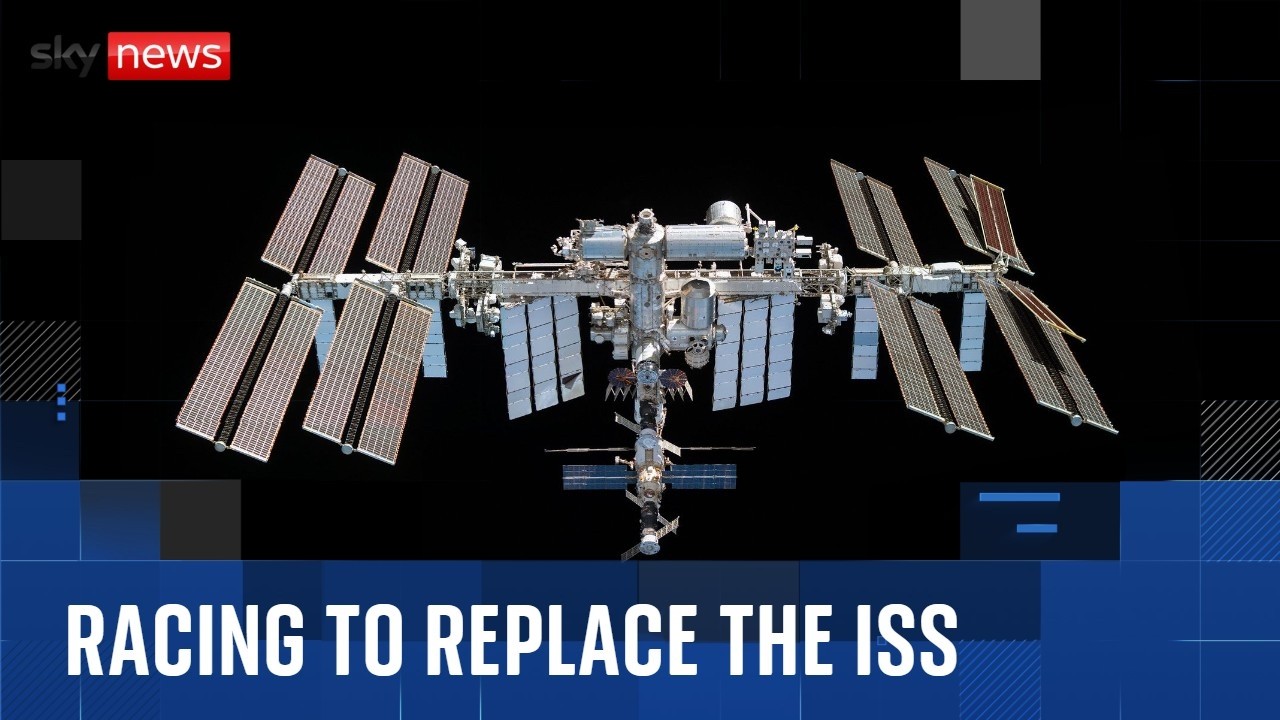 
Google AI Mode2,466 characters · September 3, 2026
# Shared 0 files Instead of a single, government-run successor like the International Space Station (ISS), the post-2030 era is planned to be replaced by a network of **commercial, privately owned and operated low-Earth orbit (LEO) space stations**. [NASA is making plans to replace the historic International](https://www.facebook.com/NOLAnews/posts/nasa-is-making-plans-to-replace-the-historic-international-space-station-with-ne/1360159609473446/) NASA and its international partners intend to deorbit the ISS into the Pacific Ocean around 2030. To prevent a gap in human spaceflight and microgravity research, NASA has been fostering a commercial ecosystem through its **Commercial Low Earth Orbit Destinations (CLD)** program (and evolving strategies like the 2026 "Ignition" framework). [NASA Changes Course on Commercial Space Stations - CSIS](https://www.csis.org/analysis/nasa-changes-course-commercial-space-stations)[Current Plans to Replace the ISS | Q&A 446](https://www.youtube.com/watch?v=5JbQSmK6ZyY)[NASA proposes new strategy for commercial space stations](https://spacenews.com/nasa-proposes-new-strategy-for-commercial-space-stations/) Key commercial space station projects in development to succeed the ISS include: * * **Axiom Station (Axiom Space):** Originally planning to attach commercial modules to the ISS first, Axiom intends to eventually detach these modules to form a standalone, free-flying commercial space station. * **Orbital Reef (Blue Origin and Sierra Space):** A massive envisioned multi-use commercial space station designed to support commerce, research, and space tourism. * **Starlab (Voyager Space, Airbus, and others):** A continuously crewed commercial space station aimed at hosting a diverse range of industrial research, technology development, and astronaut missions. * **Vast Space:** A private space company developing its own independent modular space station concepts (like Haven-1) to demonstrate commercial LEO capabilities early. [The race to replace the International Space Station](https://www.youtube.com/watch?v=n6FVZXVQSX4&t=36) * International partners (like ESA, JAXA, and CSA) are also evaluating how to transition their astronaut programs to these upcoming commercial platforms once the ISS officially signs off. Would you like to explore **the technical timeline for deorbiting the ISS** or learn more about the **specific capabilities of one of these commercial stations**?
Perplexity2,901 characters · September 3, 2026
Short answer: NASA is planning to retire the ISS by 2030 and is backing private, commercially operated space stations to take its place, with several companies vying to host and operate the next orbiting destinations. In practice, replacement efforts aim for overlap and continuity to avoid gaps in research and operations. Details you might want - What replaces ISS: The focus is on commercial space stations and private ventures rather than a single government-built successor. NASA intends to rely on commercially owned and operated platforms in low Earth orbit (LEO) to continue long-duration human presence and research in space.[The International Space Station retires soon. NASA won't run its future replacement.](https://www.npr.org/2024/02/21/1232639289/international-space-station-retirement-space-stations-future)[What Will Replace The International Space Station?](https://www.sciencefriday.com/segments/what-will-replace-the-iss/) - Timeline and overlap: NASA has discussed overlap between ISS retirement and the introduction of commercial stations, aiming to minimize gaps in scientific opportunities. Some proposals anticipated at least one commercial station could be operational by the late 2020s, with continued NASA participation through partnerships and services.[NASA Plans to Retire the Space Station in 2030 and Replace it with ...](https://www.universetoday.com/articles/nasa-plans-to-retire-the-space-station-in-2030-and-replace-it-with-commercially-owned-destinations-in-low-earth-orbit)[What Will Replace The International Space Station?](https://www.sciencefriday.com/segments/what-will-replace-the-iss/) - Notable players and concepts: Private companies have explored various architectures, including modular stations and private deorbit/return capabilities; NASA’s role includes contracting for services and ensuring safety and interoperability standards. Coverage notes that multiple companies are competing for contracts to build and operate successor facilities.[The race to replace the International Space Station - Sky News](https://news.sky.com/story/the-race-to-replace-the-international-space-station-13487532)[What Will Replace The International Space Station?](https://www.sciencefriday.com/segments/what-will-replace-the-iss/)[9 future space stations that will replace the ISS](https://www.skyatnightmagazine.com/space-missions/future-space-stations-replace-iss) Illustration (idea) - A future in which a commercial space station operates in LEO alongside existing government missions, with NASA funding portions of research, supply, and crew rotation, while the ISS is decommissioned and deorbited in the 2030 timeframe. Would you like a brief timeline with key milestones and a quick comparison of leading commercial station concepts (e.g., ownership model, target crew capacity, and expected launch windows)? I can provide a concise side-by-side summary.